Friday, 15 December 2017


Sunday, 3 December 2017
Mathematics at Home -Help your child
Talk together and have fun with numbers and patterns
Help your child to:
 |
| How many pizza slices and what is the fraction? |
1.find numbers around your home and neighbourhood – clocks, letterboxes, speed signs
2.count forwards and backwards (clocks, fingers and toes, letterboxes, action rhymes, signs)
3.make patterns when counting "clap 1, stamp 2, clap 3, stamp 4, clap 5…"
4.do sums using objects such as stones or marbles eg 2 + 3, 4 +1, 5 + 4
5.make up number stories – "you have 2 brothers and 2 sisters. There are 4 of them"
Here's a tip - maths is an important part of everyday life and there are lots of ways you can make it fun for your child.
Use easy, everyday activities
Involve your child in:
- preparing and sharing out food – "two for me and two for you". Ask, "How many for each of us?"
- talking about time – "lunchtime", "storytime", "bedtime"
- using words in everyday play like "under", "over", "between", "around", "behind", "up", "down", "heavy", "light", "round", "circle", "yesterday", "tomorrow". You can get library books with these words and ideas in them too
- asking questions like "How many apples do we need for lunches? What do you think the weather is going to be like today/tomorrow? What are we going to do next?"
Here's a tip - use lots of mathematics words as your child is playing to develop their understanding of early mathematics (eg "over", "under", "first, second, third", "round", "through", "before", "after"). Use the language that works best for you and your child.
For wet afternoons/school holidays/weekends
Get together with your child and:
- play with water using different shaped containers and measuring cups in the sink or bath
- bake – talk to your child about the recipe/ingredients using words like "how many?" "how much?" "more". Count how many teaspoons of baking soda are needed, how many cups of flour, how many muffin cases
- play dress-ups and getting dressed, use words like "short", "long", and ask questions like "what goes on first?", "what goes on next?", "does it fit?"
- create a ‘sorting box’ with all sorts of ‘treasure’ – bottle tops, shells, stones, poi, toys, acorns, pounamu (greenstone), cardboard shapes, leaves. Ask questions like "how many?", "which is the biggest group?", "which is the smallest?", "how many for each of us?"
- do jigsaw puzzles, play card and board games and build with blocks.
Here's a tip - being positive about mathematics is really important for your child’s learning – even if you didn’t enjoy it or do well at it yourself at school.
Tuesday, 21 November 2017
Why is any number(except zero) raised to zero is always 1?
250=1 , x0=1
Any number except zero) to the zero power always gives one.
Rule of exponents states that
Exponents add when you have the same base.
So if you have a number, x, and exponents, a and b, then:
xa multiplied xb = x(a+b)
So then if we make one of the exponents negative:xa multiplied x-b = x(a-b)
And if the exponents are the same magnitude (a = b) xa multiplied x-b = xa * x-a = x(a-a) = x0
Exponents add when you have the same base.
So if you have a number, x, and exponents, a and b, then:
xa multiplied xb = x(a+b)
So then if we make one of the exponents negative:xa multiplied x-b = x(a-b)
And if the exponents are the same magnitude (a = b) xa multiplied x-b = xa * x-a = x(a-a) = x0
Now, remember that if you have a negative exponent, it means you have one divided by the number to the exponent:
x-a = 1/xaSo, we can also write xa * x-a in a different way:
xa * x-a = xa * 1/xa = xa/xa
And a number divided by itself is always 1 so:
xa * x-a = xa* 1/xa = xa/xa = 1:
So now we've shown that:
xa * x-a = x(a-a) = x0
and
xa * x-a = xa * 1/xa:
This means that any number x0 = 1.
If you had trouble understanding it all with variables, let's look at it again,but this time as an example with numbers:
If we plug in numbers, (for example let x = 5, a = 2, and b = 4) then:
One rule for exponents is that exponents add when you have the same base.
52 * 54 = 5(2+4) = 56 = 15625
So then, if we make one of the exponents negative:
52 * 5-4 = 5(2-4) = 5-2 = 0:04
And if the exponents are the same magnitude:
52 * 5-2 = 5(2-2) = 50
One rule for exponents is that exponents add when you have the same base.
52 * 54 = 5(2+4) = 56 = 15625
So then, if we make one of the exponents negative:
52 * 5-4 = 5(2-4) = 5-2 = 0:04
And if the exponents are the same magnitude:
52 * 5-2 = 5(2-2) = 50
Now, remember that if you have a negative exponent, it means you have one divided by the number to the exponent:
5-2 = 1/52 = 0:04
So we can also write 52 * 5-2 in a different way:
52 * 5-2 = 52 * 1/52 = 52/52 = 25/25
5-2 = 1/52 = 0:04
So we can also write 52 * 5-2 in a different way:
52 * 5-2 = 52 * 1/52 = 52/52 = 25/25
And a number divided by itself is always 1 so:
52 * 5-2 = 52 * 1/52 = 52/52 = 25/25 = 1
52 * 5-2 = 52 * 1/52 = 52/52 = 25/25 = 1
So now we've shown that:
52*5-2 = 5(2-2) = 50
and
52 * 5-2 = 52/52 = 1
This means that 50 = 1.
52*5-2 = 5(2-2) = 50
and
52 * 5-2 = 52/52 = 1
This means that 50 = 1.
This works for any number x that you want to plug in except for x = 0,because 0/0 is indeterminate (it is like dividing zero by zero).
Let's look at what it means to raise a number to a certain power: it means to multiply that number by itself a certain number of times. Three to the second power is three multiplied by itself 2 times, or 3*3=9. Let's look at a few examples:
35 = 3*3*3*3*3 = 243
34 = 3*3*3*3 = 81
33 = 3*3*3 = 27
32 = 3*3 = 9
31 = 3 = 3
34 = 3*3*3*3 = 81
33 = 3*3*3 = 27
32 = 3*3 = 9
31 = 3 = 3
But how do you go from 31 to 30? If you look at the pattern, you can see that each time we reduce the power by 1 we divide the value by 3. Using this pattern we can not only find the value of 30, we can find the value of 3 raised to a negative power! Here are some examples:
30 = 3/3 = 1
3-1 = 1/3 = 0.3333... (this decimal repeats forever)
3(-2) = 1/3/3 = 0.1111...
3(-3) = 1/3/3/3 = 0.037037...
3-1 = 1/3 = 0.3333... (this decimal repeats forever)
3(-2) = 1/3/3 = 0.1111...
3(-3) = 1/3/3/3 = 0.037037...
No matter what number we use when it is raised to the zero power it will always be 1. Suppose instead of 3 we used some number N, where N could even be a decimal. N1=N, and to reduce the power by 1 we divide by N, soN0=N1/N = N2/2N =1.
Notice that 3(-1) is the same as 1/(31), 3(-2) is the same as 1/(3(2)),and so on. This gives us a useful property of exponents, namely that a(-b) is the same as 1/(ab).
One more explanation
Heres a quick demonstration of why any number (except zero) raised to the zero power must equal 1. As an example we will let that any number be the number 3.
Note that:
31 = 3 = 3
32 = 3*3 = 9
33 = 3*3*3 = 27
34 = 3*3*3*3 = 81
And so on
31 = 3 = 3
32 = 3*3 = 9
33 = 3*3*3 = 27
34 = 3*3*3*3 = 81
And so on
Youll notice that 33=(34)/3, 32=(33)/3, 31=(32)/3
In other words, 3(n-1)=(3n)/3
So 30=(31)/3=3/3=1
In other words, 3(n-1)=(3n)/3
So 30=(31)/3=3/3=1
This same reasoning will work for any number (not just 3), except the number 0. It wont work for 0 because you cant divide by 0. Lets call any number x:
x(n-1)=xn/x
So x0 = x(1-1) = x1/x = x/x = 1
So x0 = x(1-1) = x1/x = x/x = 1
of the answer is that this is how we've defined powers to be.
Raising something to a power greater than zero means multiplying it by itself a number of times equal to the power. So, for instance,
21 = 2
22 = 2 x 2 = 4
23 = 2 x 2 x 2 = 8
and so on.
22 = 2 x 2 = 4
23 = 2 x 2 x 2 = 8
and so on.
Now, you can multiply anything by 1 and it will still be the same thing, and likewise you can divide anything by 1 and it will still be the same. Therefore:
21 = 2 x 1 = 222 = 2 x 2 x 1 = 4
23 = 2 x 2 x 2 x 1 = 8
You see I've just multiplied everything by 1.
Now, also note that if you raise something to a negative power, then you take the reciprocal of that something:
2-1 = 1/2
2-2 = 1 /(2x2) = 1/4
2-3 = 1/8
2-2 = 1 /(2x2) = 1/4
2-3 = 1/8
And so on. Again, we can multiply by everything by 1:
2-1 = 1 x 1/2
2-1 = 1 x 1/2
Now, what happens when the power is zero?
Well, you're not multiplying by anything, except the 1 you started with. You're not dividing by anything, except the 1 you started with. So, what you're left over with is 1.
Now, here is the slightly more mathematically sophisticated version: when you raise something to a power, what you do is take 1 and multiply it by the base of the power a number of times equal to the power. So, by definition, raising something to the power of zero means you start with 1, and then don't multiply it by anything. So, naturally, 1 is what you're left over with.
Sunday, 19 November 2017
Students should be taught all four standard methods for arithmetic – addition with a carry, subtraction with a borrow, long multiplication and long division.
Gone are the days, in much of the country, of long division, mad-minute multiplication, addition with a carry and subtraction with a borrow. Today, children in provinces that have introduced the Western and Northern Canadian Protocol (WNCP) curriculum – a vast swath of the country – learn instead by investigating ideas through problem-solving, pattern discovery and open-ended exploration. "If you look at what's been happening, predominantly over the last decade, there's been an unprecedented emphasis on discovery learning," said Donna Kotsopoulos, an associate professor in Wilfrid Laurier University's education faculty and former teacher. Robert Craigen, a University of Manitoba mathematics professor who advocates basic math skills and algorithms, said Canada's downward progression in the international rankings – slipping from sixth to 13th among participating countries since 2000 – coincides with the adoption of discovery learning. "The word 'emergency' suggests a suddenness, but I don't think there's anything particularly sudden about this," said Prof. Craigen, referring to comments made in December by John Manley, the head of the Canadian Council of Chief Executives, that the results of the OECD's 2012 Programme for International Student Assessment (PISA) were "on the scale of a national emergency." "What we're seeing is the final demonstration that things have been going downhill," Prof. Craigen said. And with Canada's slip on the global stage comes an anxiety at home, one that's palpably sweeping across the country as governments tout different solutions to an almost universal problem. Parents in Alberta, Ontario and British Columbia, for example, launched petitions over the Christmas holidays, calling on their governments to revamp curriculums with a greater emphasis on basic math skills. But the governments themselves are taking different approaches, free to do so since provinces have jurisdiction over education and there are no national standards or strategies. Ontario has no plans to change its curriculum and is instead banking on ramped-up teacher training. Manitoba is watering down discovery learning with more "back to basics" fundamentals, while British Columbia appears to be heading in the opposite direction as it revises its own curriculum. Meantime, Quebec, with its intensive training and teachers who apparently refuse to shirk algorithms despite reforms, enjoys the best scores in Canada and is now at the centre of math-education research. And then somewhere in the middle of conventional math and discovery learning is JUMP Math, a Toronto-based non-profit whose curriculum reaches 100,000 Canadian students and counting. "In all the debates that are going on, we think it's a bad idea to throw [discovery learning] out, but the other side is right also," said JUMP founder John Mighton, a mathematician and author whose vision has caught the attention of The New York Times. "The parents and those who want to go back to basic math are right in some sense: You need to combine the discovery with guidance." There is no national strategy for improving math scores because provinces have jurisdiction over education. Here's what the provinces are doing – and whether they plan to make curriculum changes. BRITISH COLUMBIA Landscape: The province withdrew from the Western and Northern Canadian Protocol (WNCP) for financial reasons in 2011 and is currently revising its curriculum. The ministry of education dictates what must be taught, but not how to teach it. Here's an example: A Grade 4 student is required to learn mental math strategies for adding two-digit numbers, but the teacher chooses whether to teach the strategies by adding from left to right, or top-to-bottom with a carry. Some critics argue the current math curriculum is too conceptually based, with parents in the province launching a petition calling for greater emphasis on basic math skills. JUMP Math, which is being touted as a "third way" that emphasizes rehearsing the basics and breaking problems into small parts, reaches roughly 10 per cent of B.C. students, mathematician and JUMP founder John Mighton said. PISA 2012 ranking, when provinces are included: 12 PISA paper-based math score change between 2003 and 2012: -16 Outlook: As the province plans for a major curriculum overhaul that will put a greater emphasis on "personalized learning" across all subjects – a focus on concepts and processes rather than factual content – the ministry says math will likely change the least out of all subjects. The ministry, however, maintains that students still must be strong at elements such as mathematical algorithms and memorizing times tables. While the new curriculum is still in draft stage, expected changes include a greater emphasis on financial literacy and interdisciplinary thinking. The province is also reviewing teacher training. ALBERTA Landscape: Alberta's current math curriculum, based on the WNCP and discovery learning, is under revision. There are mandatory learning expectations for Grades 2 to 6 "that address the understanding of addition, subtraction, multiplication and division with an emphasis on mental mathematics," an education ministry spokesperson said. That means Grade 3 students are being asked to add and subtract two-digit numbers and multiply to 5 x 5. By the end of Grade 5, students are expected to know their multiplication tables. PISA 2012 ranking, when provinces are included: 17 PISA paper-based math score change between 2003 and 2012: -32 Outlook: Based on the PISA scores, Alberta's share of low performers has doubled over the past decade. "It tells me we've got some work to do," said Jeff Johnson, the province's minister of education. Parents and teachers are pushing for a better balance between the WNCP learning strategies and students knowing basic math facts. Despite a petition calling for Alberta to focus on fundamental skills, the ministry contends the curriculum already places emphasis on addition, subtraction, multiplication and division. Changes to the math curriculum won't materialize until 2016. SASKATCHEWAN Landscape: Saskatchewan's ministry of education follows the WNCP curriculum. In 2012, the government responded to concerns that basic math was being overlooked in favour of new concepts. It was announced that work would be done to help parents understand new math, while there would also be improvements in teacher training. PISA 2012 ranking, when provinces are included: 22 PISA paper-based math score change between 2003 and 2012: -10 Outlook: Following consultations, the ministry ultimately said its curriculum was "in line with what is taught in jurisdictions across North America and will continue." MANITOBA Landscape: Though the province is still part of the WNCP, it has started moving toward conventional learning. This past fall, the government responded to a push from parents and announced curriculum revisions for students in kindergarten to Grade 8. The government wanted to "ensure that there's a strong emphasis on giving kids basic math skills," Education and Advanced Learning Minister James Allum said in an e-mail. The province set clearer expectations around counting and memorizing math facts. Students are also now taught all four standard methods for arithmetic – addition with a carry, subtraction with a borrow, long multiplication and long division. The curriculum also stresses that children in kindergarten through Grade 3 not rely on calculators. The Manitoba government has also added JUMP Math to its recommended resource list, Mr. Mighton said. PISA 2012 ranking, when provinces are included: 35 PISA paper-based math score change between 2003 and 2012: -36 Outlook: Besides the curriculum changes, the province has reduced class sizes in kindergarten to Grade 3, and is piloting a new program at the University of Winnipeg to strengthen teacher education in math. ONTARIO Landscape: In the late 1990s, research into discovery learning drove changes to the math curriculum, which was last revised in 2005. Students are required to be able to multiply by 9 in Grade 4, but there is no requirement that they memorize multiplication tables. They aren't required to learn basic algorithms such as long division or adding a column of figures, either. Instead, they are encouraged to break problems down into smaller parts to work through them, or use physical materials to help them understand. PISA 2012 ranking, when provinces are included: 19 PISA paper-based math score change between 2003 and 2012: -16 Outlook: The PISA results have got Ontario worried, with parents launching a petition and Education Minister Liz Sandals vowing to tackle the problem. The province is currently in the early stages of consulting experts on math education, said Lauren Ramey, spokeswoman for Ms. Sandals. But asked this week whether the province would revamp its curriculum, Ms. Sandals said "no." On Wednesday, the government announced it will spend $4-million this year to help pay for more current teachers to take advanced qualifications courses in math and upgrade their skills. In 2015, the province will also move from a one-year teachers' college program to a two-year program. QUEBEC Landscape: The province is the Canadian leader in math, scoring with the likes of Japan and Macau. While Quebec adopted the "discovery learning" method during major educational reforms in the early 2000s, the approach was already in the works as early as the 1980s. That may have given the province the benefit of a longer lead-time in implementing it, said Stéphane Cyr, a University of Quebec in Montreal math-education professor. But some educators say Quebec is succeeding in spite of its curriculum. Nathalie Morel, vice-president of the Fédération autonome de l'enseignement, a major teachers' union, said educators have insisted on teaching and testing children on math fundamentals. Still, the province hasn't abandoned rote memorization – the curriculum, for example, calls for children to learn their multiplication and division tables by heart, starting in Grade 3. PISA 2012 ranking, when provinces are included: 8 PISA paper-based math score change between 2003 and 2012: -1 Outlook: Few studies compare why students in Canada have such different math scores, but researchers have started focusing on Quebec's intensive teacher training and its curriculum, which balances traditional math drills with problem-solving approaches. Montreal's McGill University is taking part in a study on math teaching across Canada, and early findings suggest Quebec's four-year math-teacher course may be a model to emulate. Grade school teachers, for example, must take as many as 225 hours of university courses in math education, whereas in some Canadian jurisdictions, the number can be as low as 39, according to Annie Savard, a McGill professor of math education who is part of the national research team. THE ATLANTIC Landscape: The Atlantic provinces have adopted or adapted the WNCP math curriculum, said Robert Craigen, a math professor at University of Manitoba. Newfoundland and Labrador, for example, several years ago decided to launch a new curriculum, adopted from the WNCP. In 2012, the Nova Scotia government announced the province would adopt Alberta's math curriculum, which is the WNCP's, explained Michael Zwaagstra, a Frontier Centre for Public Policy research fellow who specializes in education policy. PISA 2012 ranking, when provinces are included: New Brunswick, 25; Nova Scotia, 31; Newfoundland and Labrador, 37; PEI, 46 PISA paper-based math score change between 2003 and 2012: New Brunswick, -10; Nova Scotia, -18; Newfoundland and Labrador, -27; PEI, -21 Outlook: PEI Education Minister Alan McIsaac said his government is focusing on interventions in the early years; for example, investing in a play-based curriculum for preschool. After Nova Scotia ranked in the bottom half of the provinces in PISA 2012 scores, the government issued a press release entitled "Nova Scotia Students Perform Well In International Assessments." The release noted the math results "are a concern," but the education minister noted "math is a priority area" and that a "new curriculum is being introduced." Sixty-five countries participated in PISA 2012. No data were collected in the three territories, which are part of the WNCP.
Sunday, 12 November 2017
So what is Curriculum refresh?
Lets pray for the better Math future of Ontario students. So many changes have taken place in regard to math teaching in Ontario but outcome is still frustrating. We should only concentrate on learning the BASIC SKILLS and everything is easy.
Ontario to introduce new report cards and re-examine EQAO in 'curriculum refresh'
Thursday, 5 October 2017
Math concepts need clarification at the entry level more than at University level.
We have found a great finding from the students of various ethnic backgrounds.Like any other subject, Math needs understanding, practice, recitation and repetition. One can do all these acts at any age but early age like 6-13 years is much more appropriate and productive, Early and fresh brains do a lot of miracles. Addition,subtraction.multiplication,division,square roots,exponents etc are easy to understand at young age. I am surprised when a high school student (here in Canada) does not know the basic operations involved in calculating the square root of 196. He will simply punch the number in calculator and press the square root key. Even he may not know whether to press square root key before the number or after entering the number. It is not surprising because they have been taught like this. This is one example. There can be many more. Kids are just clay. We can mold them in any shape whereas high school students are difficult. Most of the calls that we receive from the parents of high school students do not lead to any concrete solution.Kids get bad grades -parents get worried- they call us-we decide everything and then nothing happens. Kids don't want any regular tutoring or learning . They simply want a tutor who can solve their assignments to get good grades. In most of the calls that we get, parents are talking to us without even talking to their children. Is it not surprising that a high school student can decide everything else except tutoring? Surely not! If they can why the parents call instead of them. It is OK and understandable in case of the lower age group.

Sunday, 28 May 2017
We want to share this information in the interest of students of Guelph area.(courtsey The Globe and Mail).
Parents in provinces such as Alberta, Saskatchewan and Ontario look at their children's math homework and see little, if anything, of the fundamentals they were taught just decades ago. Gone are the days, in much of the country, of long division, mad-minute multiplication, addition with a carry and subtraction with a borrow.
Today, children in provinces that have introduced the Western and Northern Canadian Protocol (WNCP) curriculum – a vast swath of the country – learn instead by investigating ideas through problem-solving, pattern discovery and open-ended exploration.
"If you look at what's been happening, predominantly over the last decade, there's been an unprecedented emphasis on discovery learning," said Donna Kotsopoulos, an associate professor in Wilfrid Laurier University's education faculty and former teacher.
Robert Craigen, a University of Manitoba mathematics professor who advocates basic math skills and algorithms, said Canada's downward progression in the international rankings – slipping from sixth to 13th among participating countries since 2000 – coincides with the adoption of discovery learning.
"The word 'emergency' suggests a suddenness, but I don't think there's anything particularly sudden about this," said Prof. Craigen, referring to comments made in December by John Manley, the head of the Canadian Council of Chief Executives, that the results of the OECD's 2012 Programme for International Student Assessment (PISA) were "on the scale of a national emergency."
"What we're seeing is the final demonstration that things have been going downhill," Prof. Craigen said.
And with Canada's slip on the global stage comes an anxiety at home, one that's palpably sweeping across the country as governments tout different solutions to an almost universal problem. Parents in Alberta, Ontario and British Columbia, for example, launched petitions over the Christmas holidays, calling on their governments to revamp curriculums with a greater emphasis on basic math skills.
But the governments themselves are taking different approaches, free to do so since provinces have jurisdiction over education and there are no national standards or strategies. Ontario has no plans to change its curriculum and is instead banking on ramped-up teacher training. Manitoba is watering down discovery learning with more "back to basics" fundamentals, while British Columbia appears to be heading in the opposite direction as it revises its own curriculum.
Meantime, Quebec, with its intensive training and teachers who apparently refuse to shirk algorithms despite reforms, enjoys the best scores in Canada and is now at the centre of math-education research.
And then somewhere in the middle of conventional math and discovery learning is JUMP Math, a Toronto-based non-profit whose curriculum reaches 100,000 Canadian students and counting.
"In all the debates that are going on, we think it's a bad idea to throw [discovery learning] out, but the other side is right also," said JUMP founder John Mighton, a mathematician and author whose vision has caught the attention of The New York Times. "The parents and those who want to go back to basic math are right in some sense: You need to combine the discovery with guidance."
There is no national strategy for improving math scores because provinces have jurisdiction over education. Here's what the provinces are doing – and whether they plan to make curriculum changes.
BRITISH COLUMBIA
Landscape: The province withdrew from the Western and Northern Canadian Protocol (WNCP) for financial reasons in 2011 and is currently revising its curriculum. The ministry of education dictates what must be taught, but not how to teach it. Here's an example: A Grade 4 student is required to learn mental math strategies for adding two-digit numbers, but the teacher chooses whether to teach the strategies by adding from left to right, or top-to-bottom with a carry. Some critics argue the current math curriculum is too conceptually based, with parents in the province launching a petition calling for greater emphasis on basic math skills. JUMP Math, which is being touted as a "third way" that emphasizes rehearsing the basics and breaking problems into small parts, reaches roughly 10 per cent of B.C. students, mathematician and JUMP founder John Mighton said.
PISA 2012 ranking, when provinces are included: 12
PISA paper-based math score change between 2003 and 2012: -16
Outlook: As the province plans for a major curriculum overhaul that will put a greater emphasis on "personalized learning" across all subjects – a focus on concepts and processes rather than factual content – the ministry says math will likely change the least out of all subjects. The ministry, however, maintains that students still must be strong at elements such as mathematical algorithms and memorizing times tables. While the new curriculum is still in draft stage, expected changes include a greater emphasis on financial literacy and interdisciplinary thinking. The province is also reviewing teacher training.
ALBERTA
Landscape: Alberta's current math curriculum, based on the WNCP and discovery learning, is under revision. There are mandatory learning expectations for Grades 2 to 6 "that address the understanding of addition, subtraction, multiplication and division with an emphasis on mental mathematics," an education ministry spokesperson said. That means Grade 3 students are being asked to add and subtract two-digit numbers and multiply to 5 x 5. By the end of Grade 5, students are expected to know their multiplication tables.
PISA 2012 ranking, when provinces are included: 17
PISA paper-based math score change between 2003 and 2012: -32
Outlook: Based on the PISA scores, Alberta's share of low performers has doubled over the past decade. "It tells me we've got some work to do," said Jeff Johnson, the province's minister of education. Parents and teachers are pushing for a better balance between the WNCP learning strategies and students knowing basic math facts. Despite a petition calling for Alberta to focus on fundamental skills, the ministry contends the curriculum already places emphasis on addition, subtraction, multiplication and division. Changes to the math curriculum won't materialize until 2016.
SASKATCHEWAN
Landscape: Saskatchewan's ministry of education follows the WNCP curriculum. In 2012, the government responded to concerns that basic math was being overlooked in favour of new concepts. It was announced that work would be done to help parents understand new math, while there would also be improvements in teacher training.
PISA 2012 ranking, when provinces are included: 22
PISA paper-based math score change between 2003 and 2012: -10
Outlook: Following consultations, the ministry ultimately said its curriculum was "in line with what is taught in jurisdictions across North America and will continue."
MANITOBA
Landscape: Though the province is still part of the WNCP, it has started moving toward conventional learning. This past fall, the government responded to a push from parents and announced curriculum revisions for students in kindergarten to Grade 8. The government wanted to "ensure that there's a strong emphasis on giving kids basic math skills," Education and Advanced Learning Minister James Allum said in an e-mail. The province set clearer expectations around counting and memorizing math facts. Students are also now taught all four standard methods for arithmetic – addition with a carry, subtraction with a borrow, long multiplication and long division. The curriculum also stresses that children in kindergarten through Grade 3 not rely on calculators. The Manitoba government has also added JUMP Math to its recommended resource list, Mr. Mighton said.
PISA 2012 ranking, when provinces are included: 35
PISA paper-based math score change between 2003 and 2012: -36
Outlook: Besides the curriculum changes, the province has reduced class sizes in kindergarten to Grade 3, and is piloting a new program at the University of Winnipeg to strengthen teacher education in math.
ONTARIO
Landscape: In the late 1990s, research into discovery learning drove changes to the math curriculum, which was last revised in 2005. Students are required to be able to multiply by 9 in Grade 4, but there is no requirement that they memorize multiplication tables. They aren't required to learn basic algorithms such as long division or adding a column of figures, either. Instead, they are encouraged to break problems down into smaller parts to work through them, or use physical materials to help them understand.
PISA 2012 ranking, when provinces are included: 19
PISA paper-based math score change between 2003 and 2012: -16
Outlook: The PISA results have got Ontario worried, with parents launching a petition and Education Minister Liz Sandals vowing to tackle the problem. The province is currently in the early stages of consulting experts on math education, said Lauren Ramey, spokeswoman for Ms. Sandals. But asked this week whether the province would revamp its curriculum, Ms. Sandals said "no." On Wednesday, the government announced it will spend $4-million this year to help pay for more current teachers to take advanced qualifications courses in math and upgrade their skills. In 2015, the province will also move from a one-year teachers' college program to a two-year program.
QUEBEC
Landscape: The province is the Canadian leader in math, scoring with the likes of Japan and Macau. While Quebec adopted the "discovery learning" method during major educational reforms in the early 2000s, the approach was already in the works as early as the 1980s. That may have given the province the benefit of a longer lead-time in implementing it, said Stéphane Cyr, a University of Quebec in Montreal math-education professor. But some educators say Quebec is succeeding in spite of its curriculum. Nathalie Morel, vice-president of the Fédération autonome de l'enseignement, a major teachers' union, said educators have insisted on teaching and testing children on math fundamentals. Still, the province hasn't abandoned rote memorization – the curriculum, for example, calls for children to learn their multiplication and division tables by heart, starting in Grade 3.
PISA 2012 ranking, when provinces are included: 8
PISA paper-based math score change between 2003 and 2012: -1
Outlook: Few studies compare why students in Canada have such different math scores, but researchers have started focusing on Quebec's intensive teacher training and its curriculum, which balances traditional math drills with problem-solving approaches. Montreal's McGill University is taking part in a study on math teaching across Canada, and early findings suggest Quebec's four-year math-teacher course may be a model to emulate. Grade school teachers, for example, must take as many as 225 hours of university courses in math education, whereas in some Canadian jurisdictions, the number can be as low as 39, according to Annie Savard, a McGill professor of math education who is part of the national research team.
THE ATLANTIC
Landscape: The Atlantic provinces have adopted or adapted the WNCP math curriculum, said Robert Craigen, a math professor at University of Manitoba. Newfoundland and Labrador, for example, several years ago decided to launch a new curriculum, adopted from the WNCP. In 2012, the Nova Scotia government announced the province would adopt Alberta's math curriculum, which is the WNCP's, explained Michael Zwaagstra, a Frontier Centre for Public Policy research fellow who specializes in education policy.
PISA 2012 ranking, when provinces are included: New Brunswick, 25; Nova Scotia, 31; Newfoundland and Labrador, 37; PEI, 46
PISA paper-based math score change between 2003 and 2012: New Brunswick, -10; Nova Scotia, -18; Newfoundland and Labrador, -27; PEI, -21
Outlook: PEI Education Minister Alan McIsaac said his government is focusing on interventions in the early years; for example, investing in a play-based curriculum for preschool. After Nova Scotia ranked in the bottom half of the provinces in PISA 2012 scores, the government issued a press release entitled "Nova Scotia Students Perform Well In International Assessments." The release noted the math results "are a concern," but the education minister noted "math is a priority area" and that a "new curriculum is being introduced."
Sixty-five countries participated in PISA 2012. No data were collected in the three territories, which are part of the WNCP.
This article is shared from Globe and Mail.
Ontario Education Minister wants the basics: ‘Learn your multiplication tables’
Discovery math has been dealt another blow, with Ontario's Education Minister departing from her province's curriculum guidelines and declaring that she expects school children to have a more solid grasp of the basics.
"We expect kids to know their basic math facts and we expect kids to take that understanding and that knowledge and use them together to be able to solve problems," Liz Sandals said on Tuesday. "That's actually a great homework assignment: Learn your multiplication tables."
Ms. Sandals was asked about arithmetic after Alberta's education minster, Jeff Johnson, directed his ministry to ensure that reciting the times tables and recalling other basic math facts will be "more front and centre" in the curriculum for elementary students starting this fall.
As with most other provinces, Ontario in its school curriculum requires students to know the multiplication tables and solve problems using a variety of strategies, but does not specifically state that they must memorize them.
Provincial governments have been staunch defenders of discovery math – also called inquiry-based – arguing that it gives children broader problem-solving skills. But many parents and some educators are demanding reform, and say children are lost without a strong grasp of traditional formulas and are unable to recall multiplication tables quickly.
Manitoba became the first province to respond to a push from parents and math professors when it announced curriculum revisions last fall for students in kindergarten to Grade 8. Students are now taught all four standard methods for arithmetic – addition with a carry, subtraction with a borrow, long multiplication and long division.
There is no indication Ms. Sandals will change Ontario's curriculum documents to reflect her comments that students should memorize the times tables.
Nothing prevents teachers from instructing children in basic formulas or memorizing multiplication tables, but the curriculum does not explicitly require them to do so.
The province regularly reviews its curriculum and is in the early stages of consulting experts for feedback on how math is taught, said Lauren Ramey, spokeswoman for Ms. Sandals.
Math teaching has come under scrutiny, and the curriculum has been a political football, ever since the Organization for Economic Co-operation and Development revealed in December that Canadian 15-year-olds had slipped out of the top 10, placing Canada 13th out of 65 countries.
Soon after the rankings were released, Ontario's minority Liberal government announced it was putting $4-million into better math training for teachers.
The Progressive Conservatives have proposed studying incentive pay for teachers who raise their students' math marks. The opposition has also said students need a grounding in the fundamentals before they engage in discovery learning methods.
The curriculum for Ontario's elementary students encourages them to use physical materials and actions in learning math, such as dividing a strip of paper into 10ths to learn fractions or drawing a picture. The theory is that having children work through math questions in detail, instead of simply using a formula to solve a problem or memorizing the answer, will help them understand math better and solve equations in their heads.
Opponents of discovery learning say it is far more time-consuming to deconstruct every problem than to use a simple algorithm to solve it.
Thursday, 11 May 2017
Math in Canada
Frustrated professors convince elementary schools to step back from 'new math' and go 'back to basics'
Republish
Reprint
Moira McDonald, Special to National Post | September 13, 2013 | Last Updated: Jan 25 2:19 PM ET
More from Special to National Post
Tracey Cervantes, a grade six teacher at Seven Oaks School in Winnipeg, uses Fraction Factory along with "old math" techniques in her classroom on Friday, September 13, 2013. Manitoba is switching to teaching math the way it used to be taught - memorizing times tables and algorithms.
John Woods for National PostTracey Cervantes, a grade six teacher at Seven Oaks School in Winnipeg, uses Fraction Factory along with "old math" techniques in her classroom on Friday, September 13, 2013. Manitoba is switching to teaching math the way it used to be taught - memorizing times tables and algorithms.
Twitter Google+ Reddit Email Typo? More
University of Winnipeg math professor Anna Stokke and two of her colleagues knew there was “a huge problem,” when they started hearing about Manitoba grade school students not being taught how to do vertical addition, carry or borrow numbers, or knowing their times tables.
Then, two years ago, she and Robert Craigen, a fellow U of W professor, and Fernando Szechtman a math professor at the University of Regina, formed WISE Math — the Western Initiative for Strengthening Math Education. They set up a website with a blog, gave lots of media interviews and started meeting with government officials to push for changes in the way math was being taught.
Mike Faille / NP Graphics
Mike Faille / NP Graphics
“Then we started hearing from a lot of parents, from all across Canada,” said Ms. Stokke, whose group has collected nearly 1,000 signatures supporting its calls for reform. “It’s a lot of work and it’s a lot of trouble to advocate for things like this … but our kids are worth it, because in the end we really need our kids to learn math.”
The group is now seeing the fruit of its efforts this fall, as Manitoba rolls out a “back to basics,” revised curriculum for kindergarten to Grade 8, one explicitly requiring students to learn times tables; have automatic recall of answers to basic problems such as 30 – 5 = 25, known as math “facts”; and standard algorithms for key math operations — and perform them without using a calculator.
It marks a step back from “new math” and “inquiry-based” teaching approaches that emphasize such things as estimating and multiple “strategies” in basic calculations — complicated methods of solving math problems in a bid to develop students’ deeper understanding of how those calculations work. Such approaches are common across Canada and are part of the Western and Northern Canadian Protocol (WNCP), a common framework, initiated in 1995 and revised in 2006, used to develop curriculum in all western provinces, Canada’s three territories, as well as in Atlantic provinces including Newfoundland, Nova Scotia and Prince Edward Island.
It’s definitely a step in the right direction
“It’s not perfect, but it’s definitely a step in the right direction,” said Ms. Stokke, who thinks this makes Manitoba the first province to “walk away from WNCP a bit.”
While Manitoba continues to be a part of WNCP, its education minister, Nancy Allan, credits WISE Math’s efforts for helping to drive the change.
“We were hearing concerns from parents and we were hearing concerns from some math professionals,” said Ms. Allan, who called her province “a leader” in math reform. Besides worrying about students not learning basic math skills, parents trying to pitch in with their children’s homework, “were having difficulty helping their young people because they weren’t able to understand it either.”
Bruno Schlumberger / Ottawa Citizen
Bruno Schlumberger / Ottawa CitizenFor parents, there was only one way to figure out this typical Grade 4 math problem.
Although standard algorithms “have been used in the past” by teachers, the revision explicitly states they must be taught, said Blaine Aston, vice-principal and numeracy specialist at Brandon’s Ecole New Era School.
“The clarity in what [teachers] are supposed to teach in each grade level in terms of math facts is a positive step,” said Mr. Aston.
Winnipeg parent Laura Lamont says the changes are “a huge relief,” especially after watching teachers get uncomfortable when asked why they couldn’t teach students how to add numbers in vertical columns instead of horizontally.
We’re not going back to ‘kill and drill’
“The kids are bright and the teachers are dedicated, but it felt like everybody had their hands tied behind their back,” said the mother of twin nine-year-old boys who took matters into her own hands last year when she enrolled them in Archimedes Math Schools, a non-profit after-school math program developed by Ms. Stokke. The program itself dates back to the professor’s efforts to give informal remedial math help to her own daughter and some of her friends.
Calculator.jpg
But this is no wholesale dumping of new math teaching. Teaching students multiple strategies in problem-solving will still be part of the mix, but the government says it is now striking “the appropriate balance,” between students’ basic math skills, conceptual understanding and problem-solving ability. The province also plans to create a mathematics education advisory committee, update high school math courses and work with university faculties of education to improve teacher training in math.
“We’re not going back to ‘kill and drill,’ that’s not what we’re trying to accomplish here,” said Ms. Allan. “But there has to be a basic foundation in regards to adding, and subtracting, and memorizing math facts [and] knowing how to do math at an early age.”
That leaves Sherry Mantyka skeptical. Although the math professor at Newfoundland’s Memorial University said she would welcome a true back-to-basics approach in her own province’s schools, an announcement touting just that in 2008 only led to Newfoundland’s adoption of WNCP. As a result, she continues to work with hundreds of university students in remedial math programs every semester. The director of Memorial’s Mathematics Learning Centre estimates about a 20% failure rate on the university’s math placement test, required for every student wanting to take at least one math course.
“They do not know sums up to 20. They do not know multiplication products up to 100. … A question like nine into 83,209, they’ll try to do with repeated subtractions,” she said. One problem, she said, is that students who resort to using the complicated “strategies” they’ve been taught in grade school, even for simple math sums, use up their working memory and are then helpless to solve more complicated calculations.
She called the changes in Manitoba “not a bad thing, but is it going to fix the problem? I doubt it.”
If we focus on memorization, we’re not going to get there
Even calling them “back to basics” is “inaccurate,” argued education professor Ralph Mason, who participated in development of the revisions. But that’s a good thing, said the University of Manitoba specialist in math education.
“The whole idea of rolling these things back to a time when everyone learned these basic facts didn’t exist,” said Mr. Mason. Previous methods that have focused on memorization and rote performance are “strategies we know never worked,” and left some students struggling.
But Ms. Stokke complains that “there’s always this false dichotomy that gets set up where they say, ‘We want kids to learn with understanding and you want skills.’ Well, that’s ridiculous. They should have both. You don’t start neglecting one side of it in favour of the other.”
John Woods for National Post
John Woods for National PostGrade six teacher at Seven Oaks School in Winnipeg Tracey Cervantes, uses Fraction Factory along with "old math" techniques in her classroom on Friday, September 13, 2013.
Alberta has had a key hand in developing WNCP and uses it as a framework for its own curriculum. Christine Henzel, director of mathematics, arts and communication for Alberta’s education department, and who has worked on the development of WNCP in the past, said she could not speak to whether Manitoba’s changes signify a rejection of any aspect of WNCP, but said it is expected that all provinces using it will adapt it to their local needs.
WNCP is based on research, she said, and is aimed at providing students with real world math skills so that they understand how and when to apply the math facts they know.
“If we focus on memorization, we’re not going to get there,” she said.
Another question arises, if the WNCP is so bad, how come Alberta, which uses it, remains a Canadian leader when it comes to international testing?
Related
‘Disgraceful’ professor ignites firestorm over his secret: modern scientists do not need advanced math
Konstantin Kakaes: Why your kids can’t add without a calculator
Can the model for resurrecting interest in math and science among Canadian students be found in Tel Aviv?
Grammar 4eva: Has ‘techspeak’ made time-honoured language skills irrelevant in the Internet age?
Ms. Stokke and, her fellow U of W professor, Mr. Craigen argue that in fact even Alberta and other provinces such as British Columbia have seen their math achievement drop in outside assessments since WNCP came on the scene.
“Every jurisdiction under WNCP has shown steadily decreasing assessment outcomes since the introduction of the WNCP curriculum,” said Mr. Craigen.
Meanwhile, there are signs parents outside of Manitoba are also searching for more help with building their children’s essential math skills, says Doretta Wilson, executive director for the Ontario-based Society for Quality Education, an advocacy group pushing for more back-to-basics approaches. The province’s student testing agency recently reported a five-year decline in Grade 3 and 6 students’ math skills and a growing number of students seeing a drop in their achievement between Grade 3 and Grade 6.
“I can tell you through our own website, our math worksheets are our highest in-demand resource,” said Ms. Wilson. “And it doesn’t look like the tutoring centres are going to go out of business any time soon in Ontario.”
National Post
LATEST CANADA VIDEOS
Blatchford: Sully the cadaver-sniffing dog
Christie Blatchford on Garland Trial Day 5
Raptors Pres and GM Ujiri, and Prime Minister Trudeau meet students affected by school shooting
Toddler's death was avoidable, fire chief says
Facebook
Find National Post on Facebook
Twitter Google+ Reddit Email Typo? More
Topics: Canada, News, Education, Manitoba
Canada Videos
Blatchford: Sully the cadaver-sniffing dog 2:46
Email Alerts
Get the latest news in your inbox as it happens.
SIGN UP
Post Picks
Lunges, crunches, squats and a wedding: How is Pippa Middleton training for her big day?
The sister of the Duchess of Cambridge is known for love of sports and 'getting ready for a wedding is very much like prepping for a triathlon or marathon'
Hey, whiny air travellers, wanna know what the problem is? It's you and your expectations
Fredrick Kunkle: Maybe it's time air travelers also look in the mirror to see why so many jetliners have become venues for Mile High cage fights
Ten ways to diminish travel stress: A frequent traveller on getting there and back again with ease
The stress of travel is enough to make you wonder if the getaway is worth it. Alice Boyes, who travels about one week out of every month, knows how trying the process can be
These five tech-based money scams are making millennials look like suckers
For the tech-savvy, all that sharing with less caring, and clicking with less checking, can lead to money lost, ruined credit and identity theft
For Sale: $3.2 million historic Hawaiian home
This historic house has views of the Diamond Head volcanic landmark and of the city
Consider the cost of a movie ticket too high a ransom to pay to watch the tone-deaf Snatched
Chris Knight: Goldie Hawn, last seen on the big screen during the early years of the second Bush administration, deserves a better welcome-back
Team Canada avoids disaster, rallies back to beat France and stay perfect at hockey worlds
Marc-Edouard Vlasic scored the winner as Canada survived a scare in a tight 3-2 win over the host team Thursday
'Soccer isn't just for boys': How a team of girls bucked tradition and won a Spanish league championship
The boys Andrea Gómez left in her wake were far from the first ones forced to retrieve one of her shots from their net
How the mostly no-name Senators, liked and hated by few, outlasted every other Canadian team
Ottawa don’t have the same rich history as the Leafs or Habs. But in the last 20 years, you’d be hard-pressed to find a more successful Canadian franchise
Georges St-Pierre's return to UFC called off because Dana White didn't want to wait any longer
A week ago, St-Pierre said he'd fight middleweight champ Michael Bisping 'anytime after October.' That wasn't soon enough for UFC's president
Sidney Crosby incident just the latest sign the NHL’s concussion protocols are a flimsy mess
Scott Stinson: This isn’t just a Sidney Crosby thing, although the incident with the Penguins captain in Game 6 was the best example
Last great hope of Capitals' Alex Ovechkin Era might have been extinguished by Game 7 loss
This was, indeed, a funeral for hockey hope. The Caps, who claimed long ago that they would win multiple Stanley Cups, may never be so strong again
Blue Jays' Devon Travis just might be the unluckiest batter in baseball
Blue Jays series preview: Travis, with a golden opportunity against a Seattle rotation hit by injury, has been hitting the ball better than his stats suggest
One of Norman Mailer’s lovers loses lawsuit over biography painting her as a ‘venal harlot’
A judge dismissed ex-supermodel Carole Mallory's lawsuit. The book described her relationship with Norman Mailer as 'strictly sexual'
Milos Raonic, Eugenie Bouchard tumble out of Madrid Open on same day with straight-set losses
Raonic was defeated by David Goffin, also a top-10 player, while Bouchard lost to No. 8 Svetlana Kuznetsova at the Masters 1000 series event
Powered by WordPress.com VIP
Our Partners
Infomart
The Province
Vancouver Sun
Edmonton Journal
Calgary Herald
Regina Leader-Post
Saskatoon StarPhoenix
Windsor Star
Ottawa Citizen
Montreal Gazette
Classifieds
Remembering
Celebrating
Classifieds Marketplace
Workopolis
FlyerCity
Classifieds Self-Service
Services
Advertise with us
Subscribe
Subscriber Services
ePaper
Newsletters
Site map
Legal
Privacy
Terms
Contact us
Copyright & permissions
Connect with Us
Twitter
Facebook
LinkedIn
Pinterest
© 2017 National Post, a division of Postmedia Network Inc. All rights reserved. Unauthorized distribution, transmission or republication strictly prohibited.
Powered by WordPress.com VIP
Follow
:)
What is taxicab number in Mathematics?
Mathematical discoveries are not always birthed in the delivery room of revolutionary thinking. Often times, they are found in small interactions that emerge from casual conversations. Throughout history, the frontiers of mathematics have been riddled with concepts protruding from the foundation of humble beginnings. With this in mind, many mathematicians see collaboration, both small and large, as an important key to advancing their respective fields.
This can readily be seen in the early part of the twentieth century. In 1914, the prodigious mathematician, Srinivasa Ramanujan, left his native home in Madras, India and traveled to the University of Cambridge in England at the invitation of two legendary mathematicians, G.H. Hardy and J.E. Littlewood. A year prior to his arrival, Ramanujan sent a letter to Hardy that contained a collage of mathematical notation scattered throughout the text. At first glance, Hardy dismissed the letter as gibberish.
However, after a more careful examination from both Hardy and Littlewood, they came to the conclusion that it was the work of a genius. This started an ongoing collaboration that yielded some of the most elegant work ever produced in the history of mathematics. In light of this, it could be said that Ramanujan’s time in England was bittersweet. While living in Cambridge, he became ill due to the contrasting climates between England and India. Hardy later retold a story about visiting Ramanujan during his illness:
“I remember once going to see him when he was lying ill at Putney. I had ridden in taxi cab number 1729 and remarked that the number seemed to me rather a dull one, and that I hoped it was not an unfavorable omen. ‘No,’ he replied, ‘it is a very interesting number; it is the smallest number expressible as the sum of two cubes in two different ways.’ “
As Ramanujan pointed out, 1729 is the smallest number to meet such conditions. More formally,  and . In honor of the Ramanujan-Hardy conversation, the smallest number expressible as the sum of two cubes in  different ways is known as the  taxicab number and is denoted as  . Therefore, with this notation, we see that .
Extending this concept a little further, a generalized taxicab number can be defined as the smallest number that can be expressed as a sum of a  number of  powers in
n
n different ways and is denoted as . For example, , since  , , and  is the smallest such number that meets the parameters given by  , , and .
Interestingly enough, no one knows what the general taxicab number, , equals for any . Even for the weak version, a solution has not been provided. In other words, if one removes the condition that the number has to be the smallest and we let , the question can be restated the following way: Does there exist any number that is expressible as the sum of two positive fifth powers in two different ways?
So far, all attempts to prove the weaker version have failed. One possible attack is to produce an example computationally. Another method would be to prove or disprove its existence rigorously. In any case, don’t underestimate the effectiveness of good collaboration emerging from casual conversations.
Let's read this article carefully
Robyn Urback: Math isn't hard. Teaching it is
Facebook | Twitter | Google+ | Email
Robyn Urback
Thursday, Dec. 5, 2013

John Woods/National Post
The process of understanding mathematical concepts is fundamentally different from learning about Canada’s Confederation. There’s a click — a light bulb moment, if you will — that has to occur for the student to “get” why 3x(9-4) = 15, not 23.

Anyone can tell a room of primary students that Canada became a country in 1867. It doesn’t matter how they say it; the message will get through. Not everyone can explain to a group of children, of whom many will struggle with abstract concepts, why subtraction comes before multiplication for this math problem, but not for others. The task is especially challenging when the teachers themselves don’t have a particularly strong grasp of mathematical principles. Or, just as bad, have a strong grasp of the concepts, but cannot communicate them effectively or are strangled by curriculum requirements.
That may be one of the reasons why Canada’s international ranking on math education has fallen this year, as reported by the OECD Program for International Student Assessment. The survey, which is done every three years, placed Canada as 13th out of 65 countries in math, down three spots from 2009 and six spots from 2006.
But the usefulness of comparing international math scores is limited; performance gaps within countries, income variants, attitudes toward competition and curriculum flexibility all affect national standings. Figuring out what Canada can do to one-up Japan involves much more than tweaking the Grade 10 curriculum.
That said, we really don’t need to look beyond Canada’s borders to see that national math scores have been dropping over the past several years. University professors across the county have complained that first-year students arrive thoroughly unprepared for higher-level math, and some instructors have been forced to teach (or re-teach) high school basics. Provincial test scores in Ontario have been dropping consistently over the past five years, with the latest round of standardized tests showing that just 57% of Grade 6 students are meeting provincial standards in math, down from 63% a few years ago. And Ontario students are among the country’s better performers; students in Manitoba, Nova Scotia and Prince Edward Island are performing much worse.

So what’s going on? Is it possible that kids in Canada — frankly speaking — are just dumber than they once were when it comes to math?
Well, no. It’s not. Ask any veteran teacher who has taught the same grade for decades, and she’ll tell you that children generally don’t change. Parents, administrators and the curriculum might, but an eight-year-old today is not fundamentally different from an eight-year-old from 10 years ago. That means that if the latter is capable of doing long division, so too is the former.
The problem is twofold. For one, straight long division isn’t on the curriculum anymore; at least not as it once was. The old ways of learning — rote strategies and “math facts” — have been replaced by so-called “discovery math” and “inquiry-based” teaching methods that focus on word problems, strategies and estimations. Manitoba in 2008 formally adopted one of the most radical math curriculum overhauls, which turned out to be an abysmal failure and has since been scaled back. Other provinces have moved forward with discovery math programs under the Western and Northern Canadian Protocol (WNCP), which was launched in 1995 and updated in 2006. And parents, never mind children, are having trouble understanding the new concepts.
Students who struggle with math are nevertheless given partial marks for effort and sent off to the next grade, where they are presumably expected to build upon principles that were never properly mastered. The problem is thus compounded.
The other issue lies with who is teaching this new discovery math, particularly at the primary level. The majority of new grads coming out of teachers college who intend to work in the primary school system come from humanities backgrounds, and many haven’t taken a formal math class since Grade 11. Many are rusty on the concepts or uncomfortable with the subject, as a professor at the University of Toronto’s Ontario Institute for Studies in Education told a local paper. Professor Mary Reid said that many student teachers were anxious when given a Grade 6 math test, and some struggled to remember basic mathematical concepts.
The provincial outlier in the OECD report was Quebec, where would-be educators have to actually learn math as part of their training. The math curriculum in Quebec is also more reflective of older rote styles of learning, as opposed to the discovery math touted in other provinces. Not surprisingly, Quebec students performed heads above students from the rest of Canada. There’s an obvious lesson there.
Math isn’t hard, but teaching it is. A teacher without a firm grasp of mathematical principles, as well as the tools to explain them, shouldn’t be the one explaining BEDMAS to the class. We need to get back to proven methods — back to basics — and leave the discovery to history and English.
National Post
Robyn Urback • rurback@nationalpost.com | robynurback
Posted in: Full Comment Tags: Canada, Discovery Math, Education, Manitoba, Math, OECD Program For International Student Assessment, Ontario, Quebec, Teaching

More on this Story
Frustrated professors convince elementary schools to step back from ‘new math’ and go ‘back to basics’
Tuesday, 2 May 2017

Math teaching in American schools
Sunday, 19 March 2017
The man who knew infinity
This is full length movie based on the Indian Mathematician Srinivasa Ramanujan. Dev Patel of Slumdog Millionaire fame performs Ramanujan.
What is Singapore Math? Read this report.
No doubt this news report is almost 7 years old it still carries weight today. We strongly encourage you to read this report and analyze yourself to find the reasons for the falling Math grades in Ontario.Monday, 13 March 2017
March 14 is Albert Einstein's Birthday and Pi day
Read this full article about the miracle mathematical symbol Pi. Although you may not be a Math lover but you will love this article about how Pi day is celebrated in MIT and advances in Pi research.
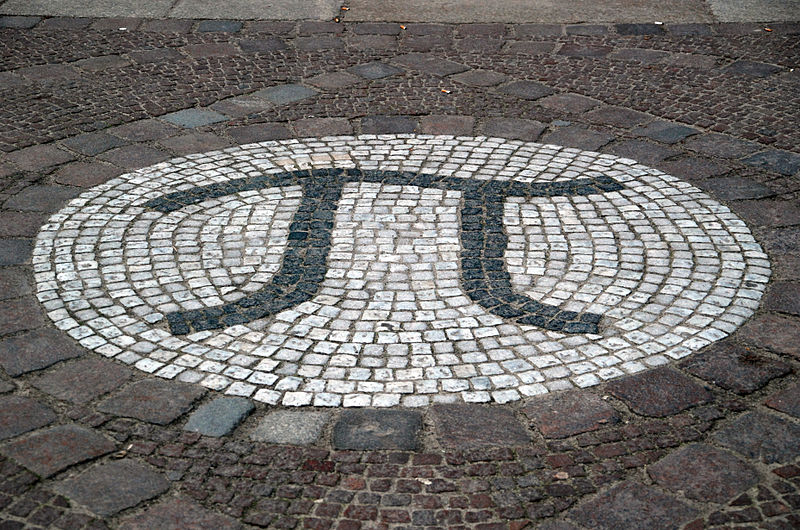 |
| The Miracle Mathematical symbol Pi |
Sunday, 26 February 2017

Wednesday, 22 February 2017
Toronto bans cellphones from classrooms
Math is like Riding a Bicycle
Ontario math curriculum subtracts the basics says Peter Taylor Queen's University Math Professor.
Certain things are automatic.Use of calculators should be discouraged in elementary schools.
“It’s just like riding a bicycle ... when you successfully ride a bicycle, it’s because certain things are automatic.”

Lot more needs to be done to fix the declining Math grades
We know the Ontario Government is doing everything to solve the issue of declining Math grades but lot more needs to be done. I am surprised when a grade 9 or 10 students tells me "I don't like addtion and subtraction" The other says "I don't like Multiplication or division". It is not the question of your liking or disliking. There is no escape. We have to do that,learn that. These are the basic math operations. Those Math pundits who are pressing hard for changing the curriculum should think twice.The kids,parents and teachers should all work as a team to acheive a fruitful goal. When a parent says I am perplexed by the Math problems of my grade 3 kid, it means that he/she needs more hard work than anybody else. Teachers should be prepared to work hard to learn new methods. In today's world we should be lucky that we have more tools(free!) available compared to 50 years back. You tube videos,articles by experts, workbooks,quizzes etc are a few to name.Ontario Minister of Education is worried about the Math grades decline.
Read more on this issue.
This is an excellent video for grade 9 Ontario students.
Ontario students in Canada are facing hardships for working with the area,volume sums. We as tutors have found that this is due to the fact that they don't know which formula to apply and where to apply. So we created a fun You Tube video where they can memorize formulas and download them to their mobile apps as cheatsheet.
Click here
Subscribe to:
Posts (Atom)